
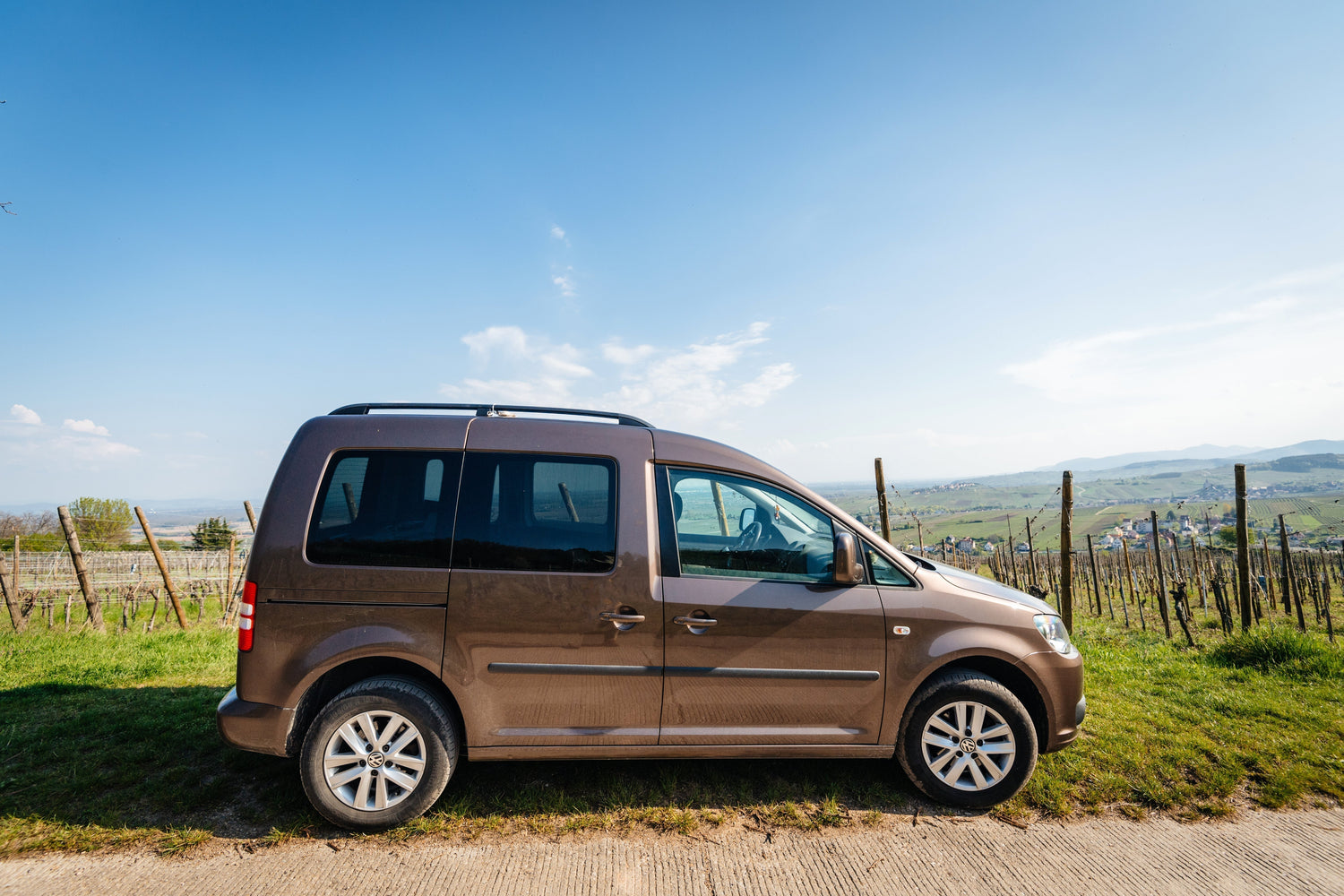
The VW Caddy has been a popular high-roof station wagon for years, combining practicality for everyday use with plenty of space. But is the compact Caddy also suitable for camping? In this blog post, you’ll find all the important information about the different versions of the VW Caddy and how, with a few tricks and the right equipment—such as fromBOXIO —you can turn this practical everyday car into a mini camper. By the end, you’ll see: Yes, you can hit the road in the Caddy and enjoy the freedom!
VW Caddy at a Glance: Variants and Camping Potential
The VW Caddy comes in several versions and sizes—and, in principle, all of them are suitable as a base for a camping trip :
-
Caddy (Short): The classic 5-seater with a short wheelbase (~4.5 m long). With the rear seat folded down or removed, you get a flat cargo area approximately 1.8 m long—enough space for a sleeping area for one person or two smaller people.
-
Caddy Maxi: The long version (~4.85 m) with an extended wheelbase. It can accommodate up to 7 seats, or—in a camper context—a cargo area measuring a good 2.15 m in length. Ideal for fitting a bed nearly two meters long and gaining additional storage space.
-
Caddy Cargo: The cargo van variant with two front seats and a large cargo area (available in short or Maxi versions). Without the rear bench seat, this is the most flexible base for a camper conversion, since you don’t need to remove any seats and can use the full space (up to ~4.2 m³ volume).
-
Caddy California: A factory-prepped mini-camper model with a bed and mini-kitchen. VW has been offering this version since 2020/21: A fold-out bed (~198×107 cm) with comfort springs, a pull-out mini-kitchen unit in the cargo area with a single-burner gas stove, and a removable camping table and chairs (stored under the bed inside the vehicle). Even a large rear tent for 4–6 people is available as an option. This makes the Caddy California a fully configured micro-camper—albeit at a steep price and without a bathroom.
Bottom line: The VW Caddy (especially the Maxi model) offers a surprising amount of space and versatility for camping trips. All variants feature a flat floor and enough space for a sleeping area. The only thing missing is the camping equipment—namely, a bed, kitchen, storage space, and bathroom facilities. This is exactly where mobile solutions come into play, allowing you to “upgrade” your Caddy into a camper without any permanent modifications. Below, we’ll introduce you to the most important BOXIO modules and bundles that let you sleep, cook, wash, and relax in your Caddy.
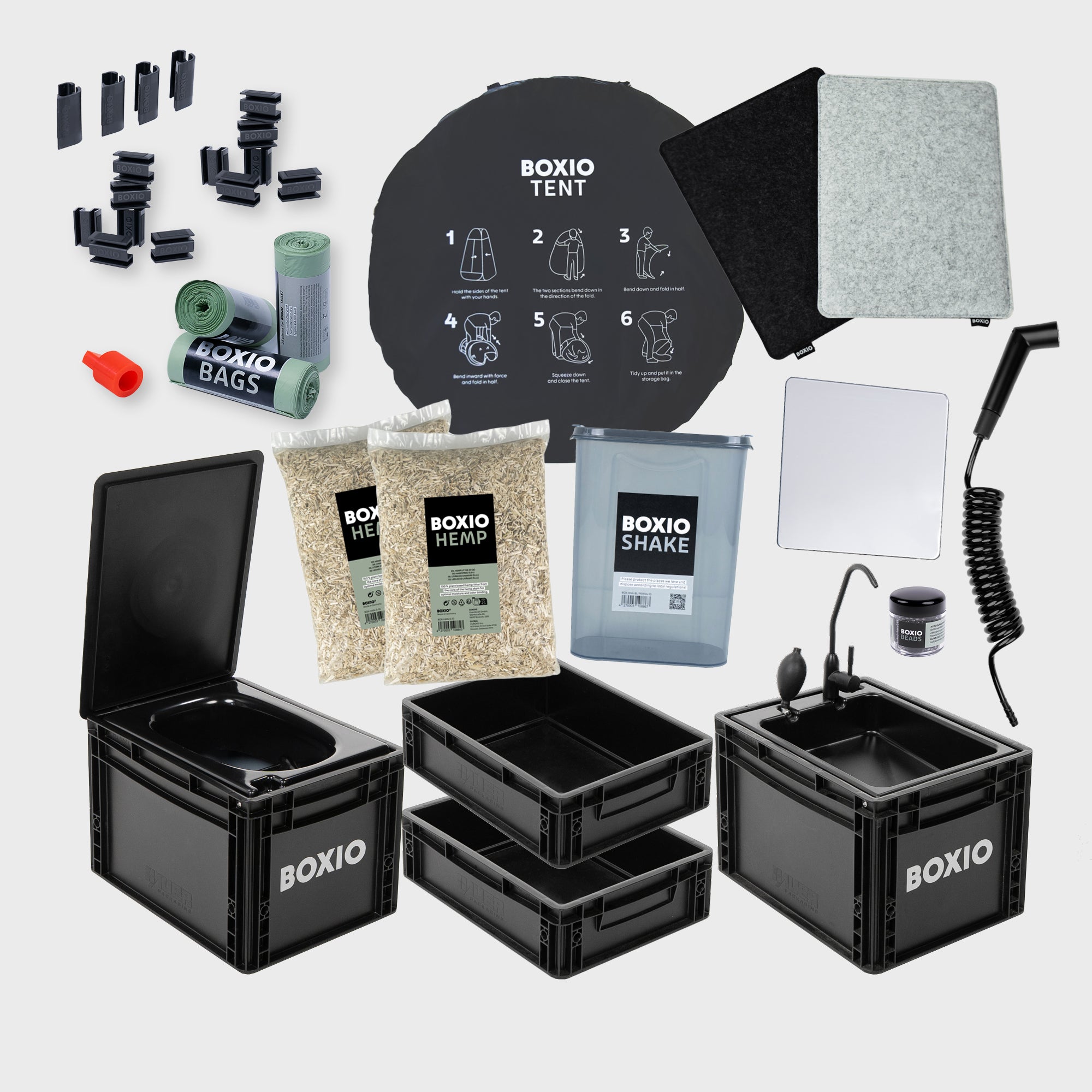
BOXIO SANITARY PLUS | Mobile bathroom with TENT
Camping with the VW Caddy 5
With the current fifth-generation VW Caddy, you can perfectly combine everyday life with adventure. As a compact camper van with a high-roof design (tall body), the Caddy is a true mini camper that offers many advantages for camping . Compared to larger motorhomes or VW Buses, it really stands out in the following areas:
-
Compactness & Mobility: The Caddy 5 is under 2 meters in overall height and is barely longer than a standard passenger car. This means it fits in almost any parking garage and can navigate narrow streets where larger campers have to stay behind. Even on construction sites, you can easily drive in the left lane thanks to its width of just ~2.10 m (with mirrors). Its manageable size makes it extremely maneuverable, easy to drive, and easy to park anywhere.
-
Everyday Practicality & Versatility: Despite its camping conversion, the Caddy remains a full-fledged 5-seater for everyday use. You can use it daily just like a regular car and don’t need a second vehicle just for camping. If needed, the rear seats can be removed or folded down to create extremely generous storage space. This way, you can fit a small kitchen and luggage in it while on vacation, while during the week you’ll have all the seats back for your family or groceries. This tremendous versatility —from a family van to a micro-camper—is a major plus.
-
Low Costs & Fuel Consumption: High-roof vans like the Caddy are usually cheaper to buy and maintain than large campers. Plus, fuel consumption is impressively low. In the ADAC test, a 122 PS Caddy California averaged just 4.6 liters of diesel per 100 km— “extremely fuel-efficient and unbeatable in the camping segment.” This not only saves you money but also helps protect the environment, without having to sacrifice mobility.
-
Camping Features & Comfort: The current Caddy 5 is available ex-factory for the first time as a full-fledged mini-camper ( Caddy California model) . This version comes equipped with everything you need: a fold-out bed with a high-quality mattress that offers sleeping comfort nearly on par with the larger VW California models, removable window bags for blackout and storage, and a practical mini-kitchen module in the rear. Even a camping table and chairs are included as standard equipment. But even without the California package, there are many camping modules on the market, ranging from removable bed frames to camping kits with a gas stove and cooler. So you can equip your Caddy exactly as needed while still enjoying full everyday comfort.
Bottom line: The VW Caddy 5 combines compact dimensions, versatility, and fuel efficiency with plenty of space and features for camping. No wonder it’s so popular as a VW Caddy camping van—it lets you blend everyday life with adventure and set off on your next mini-adventure on a whim!
Types of Camping with the VW Caddy
Whether it’s a planned camping vacation or a spontaneous weekend trip—the Caddy opens up a wide range of camping options. Here’s a brief overview of where and how you can camp:
-
Campground: At official campgrounds, you’ll find amenities like electricity, restrooms, and often friendly neighbors. For Campervan travelers in the Caddy, campgrounds are ideal for a comfortable night’s sleep, taking a shower, and charging the battery and electrical system. You’ll have a designated spot, security, and comfort—perfect for longer stays or family vacations. However, campgrounds aren’t free and are often fully booked during peak season, so making a reservation is recommended.
-
Parking Spots: RV parking spots are specially designated areas (often in cities or near attractions) for overnight stays. Usually more affordable and more simply equipped than campgrounds, they offer, for example, water supply and waste disposal stations or restrooms. With a small mini-camper like the Caddy, you can park almost anywhere that larger RVs are permitted. Parking spots are great for travelers passing through or on city trips—you park the Caddy at the spot in the evening and can drive right on the next morning without having to go through a lengthy check-in process.
-
Free-standing (wild camping): Spending the night somewhere in nature away from official sites—that gives you a sense of freedom. With an inconspicuous high-roof station wagon like the Caddy, free-standing camping is especially popular because it isn’t immediately recognizable as a camper. For example, you can sleep in your vehicle at the edge of a quiet forest or on the beach without attracting much attention (keyword: wild camping with a high-roof station wagon). Note: In many countries—including Germany—wild camping is officially prohibited or restricted. However, in this country, spending a single night in your vehicle to rest and regain your ability to drive is permitted. That means: If you’re tired, you’re legally allowed to pull into a parking lot for one night and sleep. It’s important that you really just park (don’t set up camping gear outside, no campfires, etc.); then, staying overnight is often tolerated. It’s best to check the rules of the respective country or region in advance. With the Caddy and its stealthy exterior, you’ll certainly have the best chance of spending a night out in the wild undisturbed and discreetly.
-
Urban Camping (City Trips): Even in the city, you can spend the night in the Caddy—essentially camping in the urban jungle. The concept is similar to off-grid camping, just in an urban setting: You find a legal parking spot in the city and spend the night in the vehicle. Thanks to its compact size, the Caddy barely stands out on the street, especially if you make sure the interior is darkened. Urban camping is ideal, for example, at a festival, when passing through a city, or after a concert—so you don’t have to drive home. Keep a low profile: Park where overnight stays are tolerated (no residential parking spots with restrictions), and avoid loud noises and bright lights visible from the outside. This way, you can sleep pretty stealthily in the Caddy right in the city and have the bakery or café just around the corner in the morning—everyday life and adventure come together here!
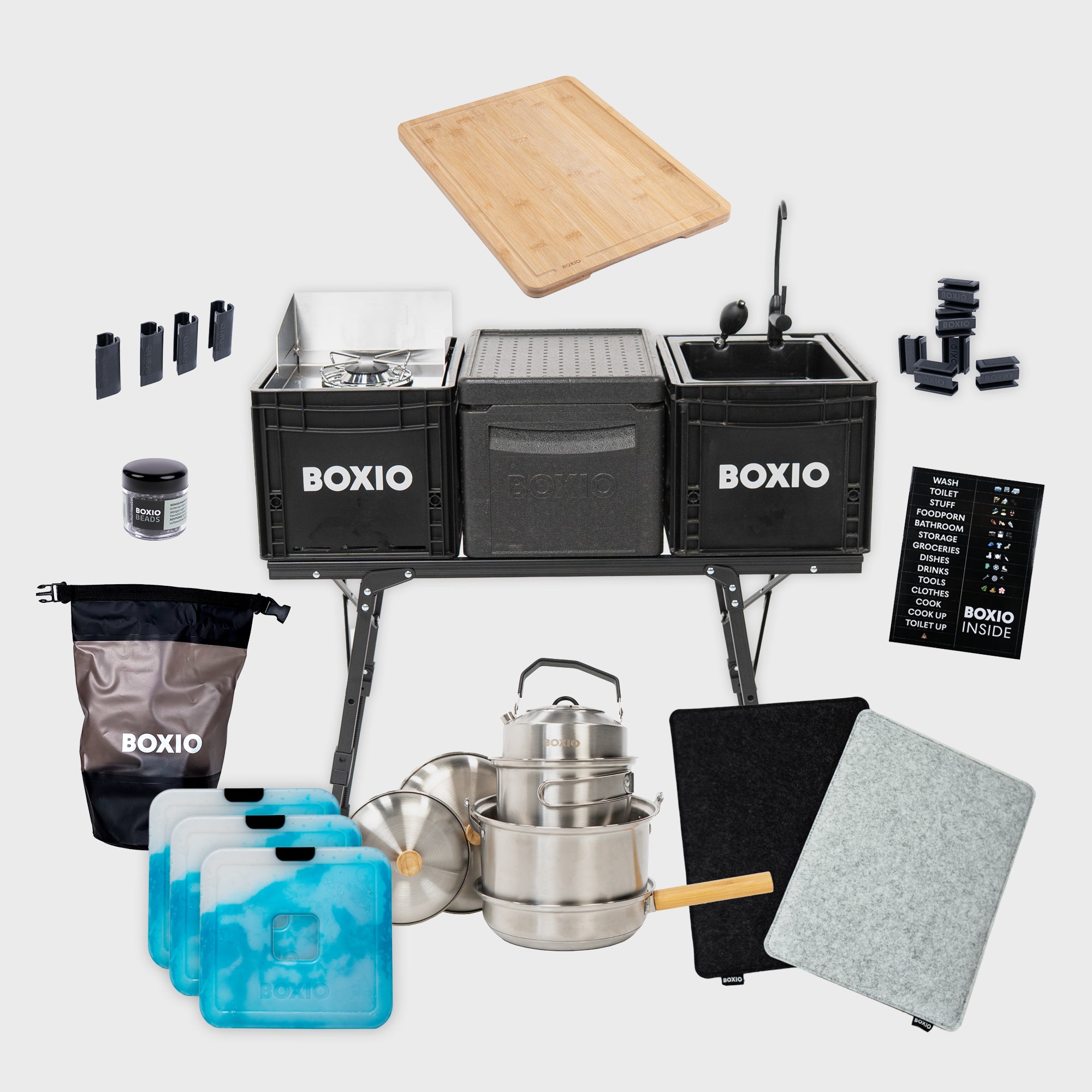
BOXIO KITCHEN PLUS I Mobile outdoor kitchen with standing height
BOXIO RACK Camping Box in the VW Caddy—From Everyday Car to Micro-Camper
For many, the VW Caddy is the perfect everyday car—compact, fuel-efficient, and yet surprisingly spacious. That’s exactly where the BOXIO RACK comes in: With this modular camping box, you can turn your Caddy into a full-fledged micro-camper in just a few minutes—without any permanent modifications or drilling.

Why the BOXIO RACK is such a great fit for the Caddy
Several RACK modules are compatible with the VW Caddy:
-
RACK BED M – the modular camping bed for minivans like the Caddy
-
RACK BUNDLE S & M – the complete camping box with BED + RACK BOX, also specifically designed for the VW Caddy
So you have a choice:
-
Just sleeping? → RACK BED M
-
Sleeping + kitchen + storage? → RACK BUNDLE S or M
The BOXIO RACK is more than just a box—it’s a modular furniture system consisting of the BOXIO BED and the RACK BOX that can be flexibly combined.


Sleeping space for two—in the compact Caddy
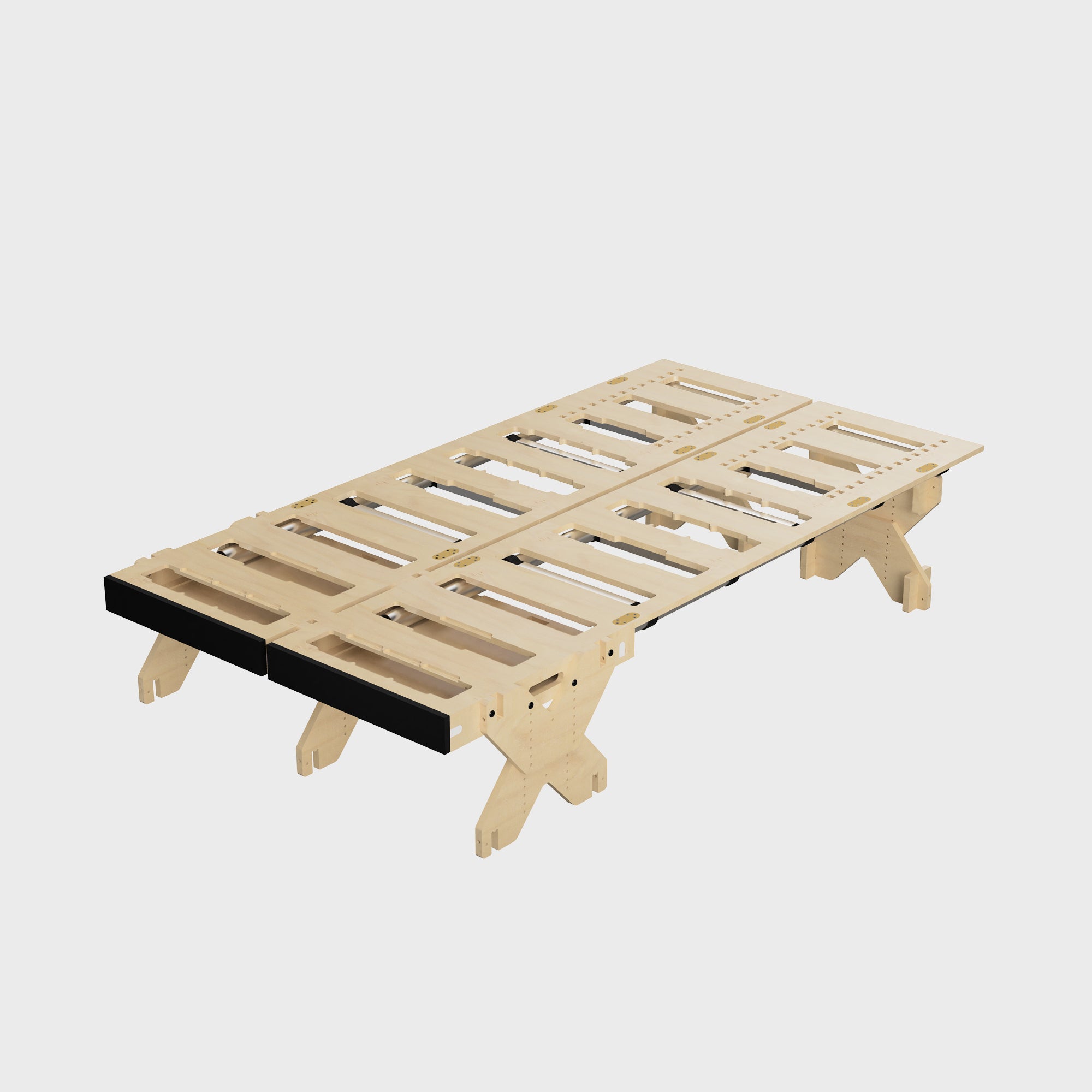
The BOXIO RACK BED M is height-adjustable and designed to fit perfectly in minivans like the Caddy—even with the seats folded down.
-
When extended, it creates a sleeping surface of up to 2.00 m, where two people can sleep comfortably.
-
When the BED is folded up, there’s room for two BOXIOs —so you can make the most of the limited storage space in the Caddy.
-
Thanks to the height-adjustable legs, you can set the bed so that your Caddy remains practical for everyday use during the day while still providing a level sleeping surface in the evening.
Camping box with outdoor kitchen in the rear
If you want to use your VW Caddy not just as a place to sleep but as a real mini-camper, the BOXIO RACK BUNDLE S or M is a great option:
-
Depending on the bundle size, the RACK BOX holds 2–3 BOXIO products —such as TOILET, WASH, COOK, and COOL.
-
The RACK BOX lid folds out to form a sturdy work surface—perfect as an outdoor kitchen in the rear of your Caddy.
-
You can fold the BOXIO BED down onto the RACK BOX to save space when you need more cargo room on the road.
This way, you’ll have everything you need for a weekend at the lake or a road trip in your compact VW Caddy—without having to install a permanent kitchen unit.
Flexible for everyday use, a full-fledged camper on the weekend
A major advantage of the Caddy + BOXIO RACK setup:
-
You secure the system using existing tie-down points, so you can use it as a removable camping box —no TÜV registration required, no permanent installation.
-
The modules are compact and lightweight —you can load and unload them on your own as needed and use your Caddy as a family or work car again during the week.
-
Thanks to the Eurobox dimensions, everything stays super organized: the bathroom, kitchen, storage space, and sleeping area fit together seamlessly, instead of cluttering the interior with individual boxes.
VW Caddy + BOXIO RACK Camping Box – A Microcamper Without Compromises
With the BOXIO RACK, you can turn your VW Caddy into a fully equipped micro-camper in no time:
-
a cozy, height-adjustable bed for up to two people
-
well-designed storage space for TOILET, WASH, COOK & COOL
-
Outdoor kitchen in the rear thanks to a fold-out countertop
-
No permanent modifications—can be converted back at any time
Perfect for anyone who loves using their Caddy for everyday life—but still wants to use it as a little home on wheels on the weekends.
BOXIO RACK BED M I Modular camping bed minivan
E-Caddy Camping: On the Road with an Electric Car
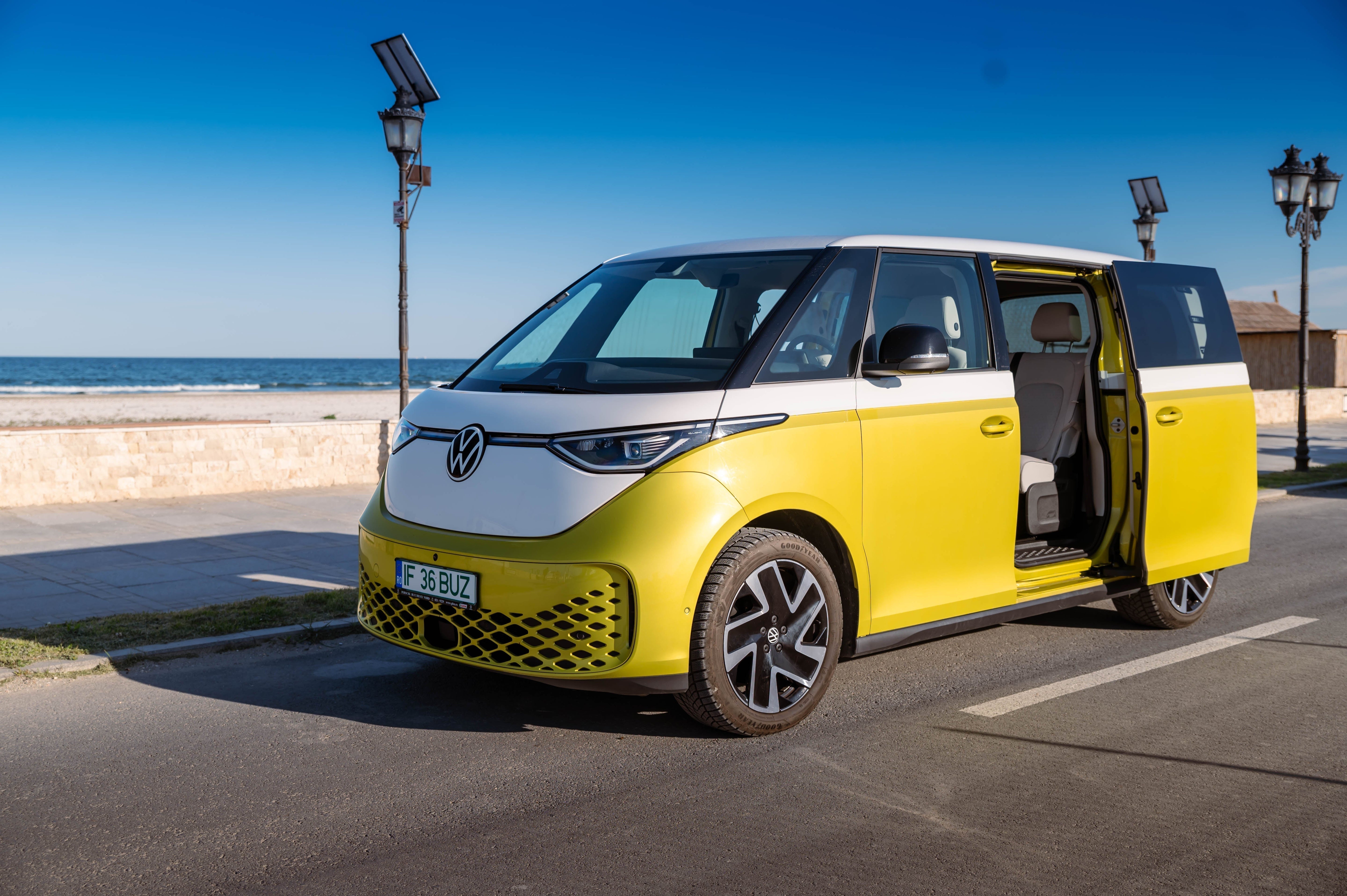
So far, a fully electric Caddy has only been spotted in the form of the ABT e-Caddy (a conversion of the previous model)—which had a range of approximately 220 km (37 kWh battery) . Regardless, the following tips for camping with an electric car naturally apply just as much, whether you’re driving an ID.Buzz or a future E-Caddy:
-
Range & Route Planning: Plan enough charging breaks for longer trips. It’s best to make a fast-charging stop every ~200–300 km—this often coincides with coffee or meal breaks anyway. Modern electric vans can recharge to 80% in about 30 minutes, so your trip is hardly delayed. For a weekend trip, the range is usually more than sufficient if you recharge quickly along the way.
-
Charging at Campgrounds: Many campgrounds allow you to charge electric cars using outlets at your campsite or even have wall boxes on-site. Be sure to check with the campground operator beforehand about the terms and conditions. If you’re charging via a Schuko outlet (230 V household outlet), set the current to a low level (e.g., 6–8 A instead of 16 A) to avoid overloading the circuit. Also note that some sites charge extra fees for charging—otherwise, regular charging at the campground can get expensive.
-
Energy Management While Parked: Cool or heat the interior well in advance of bedtime (preferably while the car is still plugged in, if possible). During the night, avoid running the air conditioning continuously on the vehicle’s battery. Instead, use energy-saving solutions: for example, an additional power station or battery-powered lamp for lighting, and a small USB fan for fresh air. To keep food cool, use passive ice packs (like those in the Boxio Cool)—this conserves your car’s battery and avoids unnecessary power consumption while parked.
-
Silent & Off-Grid: One advantage of an electric car when camping is its silence and zero emissions. So, in theory, you can even park freely somewhere and briefly use the auxiliary heater or air conditioning without disturbing anyone—but you should always keep an eye on your energy consumption. It’s better to bring an extra blanket or a good sleeping bag than to leave the heater running all night.
-
Charging on the Go: Find out in advance where fast-charging stations are available along your route (apps and navigation systems can help with this). Meanwhile, vacation regions and tourist hotspots are also adding charging stations. The more remote your destination, the more important it is to have your charging plan under control—with a Plan B if necessary (e.g., a stop in a city to charge).
-
Weight & Payload: Keep in mind that additional camping gear increases the vehicle’s weight, which slightly raises fuel consumption. However, the Caddy has enough payload capacity to carry the Boxio modules without reaching its limits—you should be even more mindful of reducing heavy extra luggage in an electric car.
All in all, nothing stands in the way of a camping adventure with an electric vehicle if you plan ahead a bit. The best part about the Caddy (and similar electric vans) is that you get to enjoy a quiet, zero-emission driving experience and, thanks to modular equipment, camping comfort almost like that of a large RV. So: Charge up the Caddy, pack your Boxio modules—and then head out into nature!
VW Caddy Camping – the most important questions
1) Is the VW Caddy generally suitable for camping?
Yes! The Kurz, Maxi, Cargo, and California models are all suitable for camping. What’s missing is the built-in camping equipment (bed, bathroom, kitchen). You can solve that with modular solutions—for example, with the BOXIO SANITARY PLUS for the bathroom and the BOXIO KITCHEN BUNDLE for the kitchen.
2) Which Caddy model is best suited for what?
-
Caddy (Short): maneuverable for everyday use, ideal for solo travelers or couples.
-
Caddy Maxi: more sleeping space and storage—great for two people plus gear.
-
Caddy Cargo: empty cargo area, perfect for modular upgrades.
-
Caddy California: comes standard with a bed and mini-kitchen; with BOXIO, you can add a bathroom and kitchen as needed.
3) How do I get a comfortable sleeping solution—without a permanent conversion?
A fold-out mattress is enough to “just get going.” More comfortable: modular bed/storage units. Teaser: Coming soon—the BOXIO Rack —storage space for multiple Euroboxes + a slatted frame that doubles as a camping bed with a pull-out section, which can be installed and removed in minutes (ideal for leased vehicles).
4) What basic equipment do you recommend as a starter setup?
-
Bathroom: BOXIO SANITARY PLUS
-
Kitchen: BOXIO KITCHEN BUNDLE or KITCHEN PLUS
-
Seating/dining: BOXIO CHAIR & BOXIO TABLE
-
Cooking/eating: BOXIO COOKWARE + BOXIO EAT (cutlery)
Everything is stackable in Eurobox format—fits perfectly in the Caddy’s trunk.
5) Can I “camp off the grid” (wild camping) with the Caddy?
That depends on the country or region. In Germany, spending a quiet night in the vehicle to rest up and regain the ability to drive is often tolerated. Keep a low profile (don’t put out any furniture or awnings), and respect the rules and nature.
6) Cooking in/with the Caddy—what should I keep in mind?
Cook indoors only with the utmost caution (ventilation, fire safety); it’s better to cook outside next to the vehicle. The modular kitchen is ideal for this—e.g., the BOXIO KITCHEN BUNDLE or KITCHEN PLUS.
7) How do I set up a bathroom/toilet without a permanent installation?
With a portable bathroom set like the BOXIO SANITARY PLUS: dry toilet, sink, shower setup, and privacy tent—self-sufficient and quick to stow away.
8) Does all this equipment really fit in the Caddy?
Yes, the Eurobox system is designed exactly for this: stackable, non-slip, and lightweight. The kitchen, bathroom, chairs, table, cookware, and cutlery can be packed efficiently—and the Caddy remains practical for everyday use.
9) What is “micro-camping” with the Caddy?
Minimal setup, maximum freedom: sleep in the car, cook outdoors, and be ready to go in no time. You need a simple sleeping solution, an outdoor kitchen, and lighting and organization. Perfect for spontaneous weekends and city trips.
10) E-Caddy Camping—what’s important?
Plan charging stops (every 200–300 km), use Schuko outlets or a wallbox at the campground, power lights and devices via a power bank or power station, and rely on passive cooling (e.g., ice packs). Run the air conditioning before bed and ventilate the space gently overnight.
11) Leasing & Reinstallation: Is that possible?
Yes. All BOXIO solutions are not permanently installed and can be removed in minutes—which is exactly why the upcoming BOXIO Rack is so exciting: a bed and storage space without drilling, and it can be quickly removed when you want the Caddy to be “clean” again.
12) Tips for comfort and safety at night?
Tint the windows evenly, use ventilation slots and mosquito nets, manage condensation, store valuables out of sight, and choose your parking spot wisely (quiet, legal, level). A good mattress makes the biggest difference.